I’ve recently read three articles in TES about women in educational leadership, which have made me thoughtful.
On 20th May 2025, Manos Antoninis wrote a piece entitled ‘Female school leaders benefit the whole education system’.
Manos, who is the director of Unesco’s Global Education Monitoring Report, discusses the positive impact of women headteachers around the world.
“Unesco’s new report shows the benefits for the entire education system that can come from having women at the top. Schools with female leaders in several African and Asian countries demonstrate significantly improved learning outcomes for students, sometimes equivalent to months of additional schooling.
In the United Kingdom, a study of the time principals spend on nine different domains of leadership shows that female principals spend a higher proportion of their time working with others in planning and setting goals than men.”
He argues that, in all countries, more needs to be done to train those involved in headteacher selection, to counter unconscious bias, to address gender barriers and to improve mentoring and support, “so that every capable leader has both the opportunity and the support to drive excellence for all learners. The future of learning, and the future of a more equitable society, depends on it.”
In the second article, which appeared on 15th July 2025, Sarah Mullin drew on her doctoral research into the perception and experiences of women secondary school headteachers in England.
‘The barriers that still block female leaders – and how to remove them’ explores the barriers facing female secondary school teachers who aspire to, and secure, headship, before going on to suggest how the challenges might be addressed.
Sarah concludes, “Headteachers shape the culture, direction and wellbeing of entire school communities. When leadership is diverse and inclusive, students learn that anyone – regardless of gender, background or belief – can lead.
Every woman in headship deserves recognition, reward and opportunity. And every student deserves to see leadership that reflects the world they live in.”
The third piece which struck me was this wonderful reflection of her career in teaching, including roles in which she led schools and multi-academy trusts, written by Caroline Derbyshire, and appearing on 18th July 2025: ‘ “Thanks, teaching”: a love letter after a 36-year relationship’.
Caroline remembers how few women led schools when she began her teaching career in the 1980s, and recognises that we have come a long way since then, although she wryly observes that “75% of teachers are female yet only a third of multi-academy trust CEOs are.” We clearly still have work to do at that level of educational leadership. Role-models like Caroline are crucial, and as she points out, “One of the things I am most proud of is the talented women who have been able to follow in my wake as headteachers.”
This made me reflect on the establishment and growth of the grassroots initiative #WomenEd, which I have supported since its inception in 2015. Helena Marsh (who, at the time, was deputy principal in the school where Caroline was the principal) wrote a blog about her attendance at an event ‘Empowering Women in Education Leadership’. Helena’s post, ‘What Glass Ceiling?’, concluded, “I left the event with a bounce in my trademark red-heeled step, ready to combat everyday leadership sexism and hold out the ladder for other capable women to empower them into educational leadership.”
I read Helena’s blog, and then wrote a response which I called ‘Lost Leaders’, in which I talked about strong women I had worked with in my 30-year career whom I assumed would go on to headship in due course, but didn’t. Further blog posts picked up the discussion, there was a good deal of traffic on the subject on Twitter, and then #WomenEd was born, with a strong group of co-founders and an inspiring initial ‘unconference’ at the Microsoft Offices in London in October 2015. For interest, I have written about the establishment and growth of #WomenEd. In this post I describe that first unconference at which “the atmosphere was electric, the mood energising, and so many of the participants left fired up and determined to tackle personal and professional challenges with increased confidence and commitment, and, importantly, to support other women along the journey.”
I think we have made significant progress in the last ten years, and #WomenEd has been an important part of that, organising national, regional and international groups; running an annual unconference (online when Covid meant face to face conferences weren’t possible) and a range of other events; offering mentoring and support to women in education at all levels of experience; sustaining a blog and a website, and publishing three books.
Networking is key. Social media has helped us all to build connections and to publicise events, blogs and books. I realise that the scale and scope of my professional contacts has been hugely extended and enriched by my involvement in Twitter/X, Bluesky and LinkedIn. In particular, my network of women educators, and all those who support women educators, has led to many professional opportunities and experiences, and some profound friendships.
There is clearly still work to be done, as Manos’ and Sarah’s articles, and Caroline’s observation about the proportion of MATs led by women, make clear. I have worked with, and still meet in my consultancy work, some amazing women leaders and future leaders. Supporting them to have faith in their own professional potential, doing what we can together to dismantle the obstacles to progress and to help them to secure jobs in which they can be successful and feel fulfilled, is a significant driver for me. I support men, too, of course! But #WomenEd, now ten years old, and the professional development of women headteachers in all types of school, will always have a special place in my heart.
If you’re a woman educator who feels in need of further encouragement, guidance or support, please get in touch.
Photo credit: John Berry
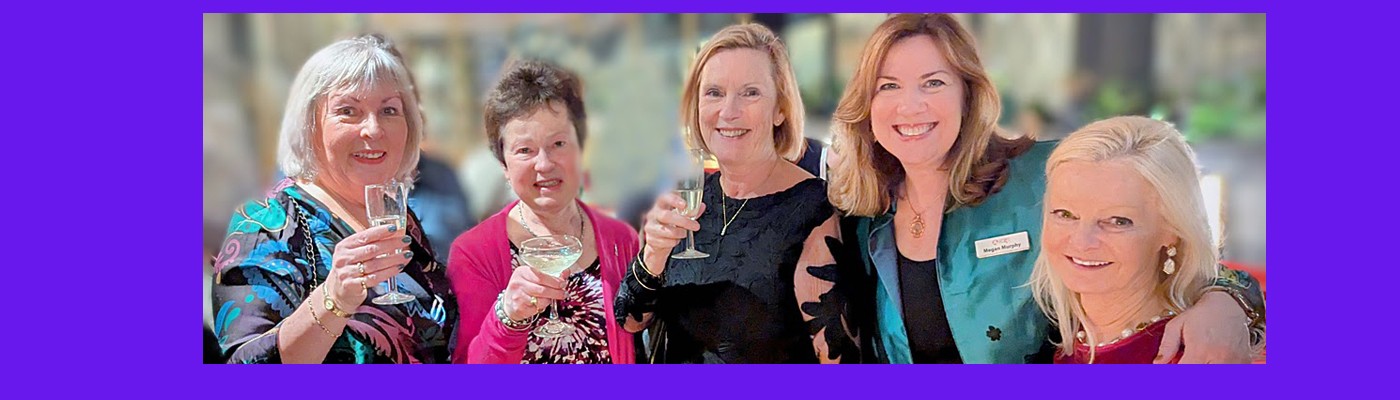
In November 2024, at a GSA event with other current and former impressive women leaders.

 jillberry102