My most recent blog post focussed on those moving into a new leadership role, at any level, this autumn and, if you’re in this position, I hope it was helpful as you prepare for and then embark on the next stage of the adventure. As I say in that post, I find leadership fascinating. Our schools’ success depends, I believe, on strong, committed and compassionate leadership at every level, and supporting (and constructively challenging) aspiring and serving Middle Leaders, Senior Leaders and school leaders is something I still find energising, enjoyable and well worthwhile.
I had several leadership roles in my 30 year career in schools, and I found each one a positive experience and a brilliant opportunity to keep learning – how do we lead well in order to get the best from others, and to be our best in the process? I have enjoyed reading articles in the tes magazine’s ‘How I Lead’ series, where a number of educational leaders in different contexts reflect on what is important to them, and what priorities and behaviours characterise their leadership.
In this post I consider how I led, particularly in my headship, building on all I had learnt as a pastoral and curricular Middle and Senior Leader in the years leading up to that point.
Knowing those I led, both as individuals and in terms of the dynamic between them, was always a priority for me, following my appointment to a new leadership role. As a successful external candidate, this can be a steep learning curve, but developing strategies to get to know who people are, what they do and how they do it, what drives and motivates them and what they might need from you as their new leader is an important first step. Building mutual trust and respect takes time, but is well worth the investment. As a head, I needed to secure the most positive and constructive relationships with governors and with parents, too, and this was something to which I devoted considerable time and energy throughout my ten years of headship – it is a continuous process.
I expected the governors to challenge me constructively, and to ask difficult questions at times, but I felt my job was to have compelling answers, and sometimes explaining actions and decisions to governors helped clarify my thinking about the right way forward. I always felt that the governors had confidence in me, were fundamentally supportive and believed in my capacity to do the job they had appointed me to do.
I found that with new parents/families, who were initially very pleased that their child had joined the school, I was able to build up ‘credits’, which I realised I might subsequently have to draw on if their child experienced difficulties of any kind. Occasionally I would use the phrase, ‘I need you to trust my professional judgement on this’, and the credits which had built during the early stage of our relationship would inevitably come into play, here. Although dealing with families who are unhappy with how the school has handled a situation will always be challenging, I appreciated that in the vast majority of cases a disgruntled parent was motivated by love for their child, which helped me to empathise and understand their perspective.
And I took every opportunity during my headship to get to know the pupils (and for them to get to know me) – a joy rather than a duty. For example, I taught every Year 7 class for one lesson a week, did duties and supported extra-curricular activities, accompanied trips and visits, met each individual member of Year 13 to discuss their reference and future plans – anything which brought me into contact with the students reminded me of what mattered most.
Every interaction, whether with an individual, a small group or a large gathering, presented an opportunity to reinforce positive relationships. I loved taking assemblies, for example, which offered the chance to share and to talk about things I felt were important and which might encourage the pupils and the staff to reflect on something they might not otherwise have thought about that day.
I spent a considerable amount of time meeting prospective pupils with their families – when I was representing the school or promoting what we had to offer I always felt like a salesperson for a product I really believed in! I was proud of the school and its community and enjoyed any opportunity to communicate that, including when addressing larger groups at Open events or on formal public speaking occasions.
I certainly worked hard as a head, and there were some difficult decisions to be made and challenges to be faced, but I never felt isolated – I had a strong support network within and beyond the school, and I drew on this, and contributed to it, offering help to others when I could. I think I was always able to ‘compartmentalise’, and to carve out space and time for myself, when I could rest, refresh and re-energise, so that I could return to work ready to do the best job I could. For me, absorbing myself in activities which demanded my focus so that I didn’t have the headspace to think about work-related issues always helped – travel, choral singing and reading good fiction worked for me.
And I always felt I had agency and choices – I do believe most of us work as hard as we demand of ourselves, rather than being driven by the expectations of others, and being realistic about what we take on, and how long we spend on it, is crucial. We need to understand the concept of ‘enough’!
Looking back over my career, I recognise I didn’t always get leadership right – no one does, I think – but I did reflect, and learn, and just try to do a little better next time. I have learnt a huge amount, too, since I stepped back from headship, working with many aspiring and serving leaders, attending courses and conferences, reading about leadership and engaging in discussions, including on social media. Exploring what I think and processing prior experiences in my writing has also helped – my doctoral thesis, my book: ‘Making the Leap – Moving from Deputy to Head’, this blog, and various articles and book chapters I’ve authored over the past fifteen years.
I do feel proud of the work I have done, and the work I continue to do. Leadership is a privilege, I think, and I am fortunate to have had the opportunity to lead in good schools with amazing colleagues, and then to work with some inspiring individuals in the last two decades.
Thank you to you all.
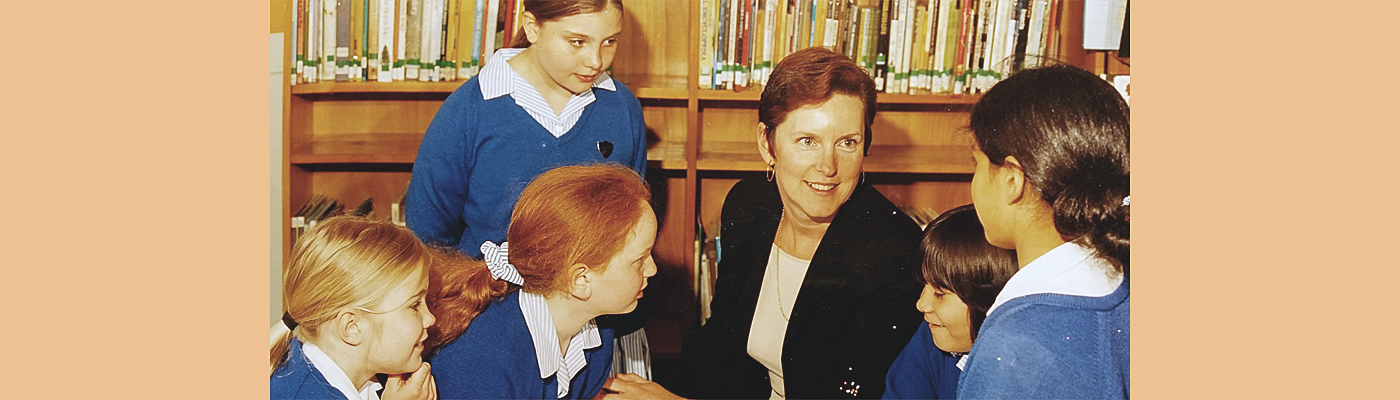
Photo credit: Tony Woodcock Photography, Bedford – with Year 3 pupils at the beginning of my headship of this 7-18 girls’ school in 2000.

 jillberry102