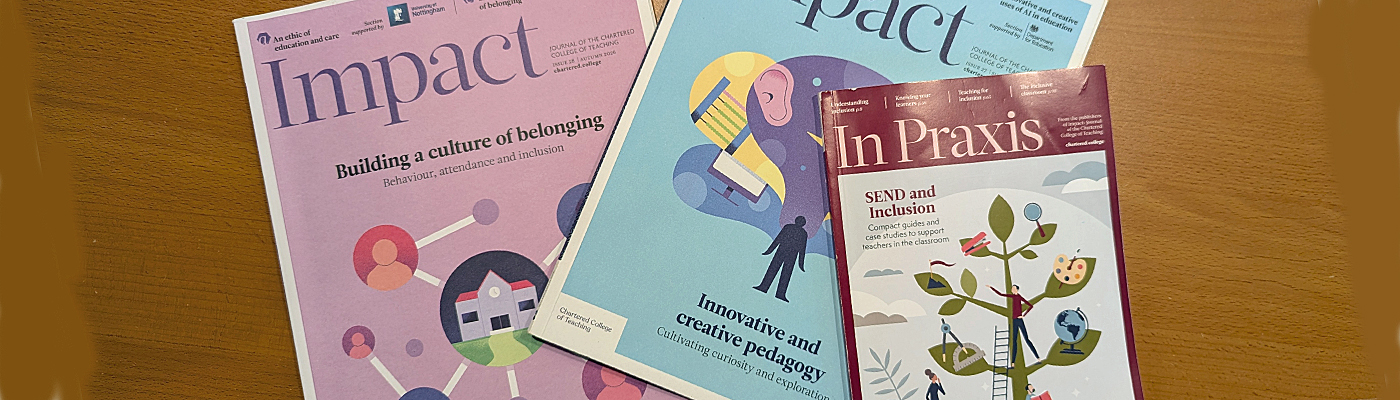
I recently read the new publication from the Chartered College of Teaching, ‘In Praxis’, and, impressed with the different articles it contained, which make a strong connection between educational research and the work of practitioners in schools and colleges, I posted snippets on LinkedIn, and was heartened to see that the posts generated a significant amount of interest and a number of comments.
I joined the Chartered College when it opened, and have always found it an excellent source of information, training and resources, which together serve to support schools and colleges who are committed to ensuring that the work they do is successfully evidence-informed. When I work with aspiring and serving leaders at all levels, I usually talk about how organisations such as the Chartered College can contribute to our professional growth. I also recommend engaging with others on social media for sharing ideas and resources, discussing educational issues and building professional relationships, and how growing such networks, face to face and online, can help us both to learn and to contribute to the learning of others. I have heard from educators who have told me that they have engaged with social media following my urging them to do so, and, in the words of one of them, ‘It’s transformed my professional practice’. I know that some teachers and leaders fear that use of social media can drain precious time, but I really believe that, judiciously used, social media (LinkedIn, in particular, these days) can SAVE us time.
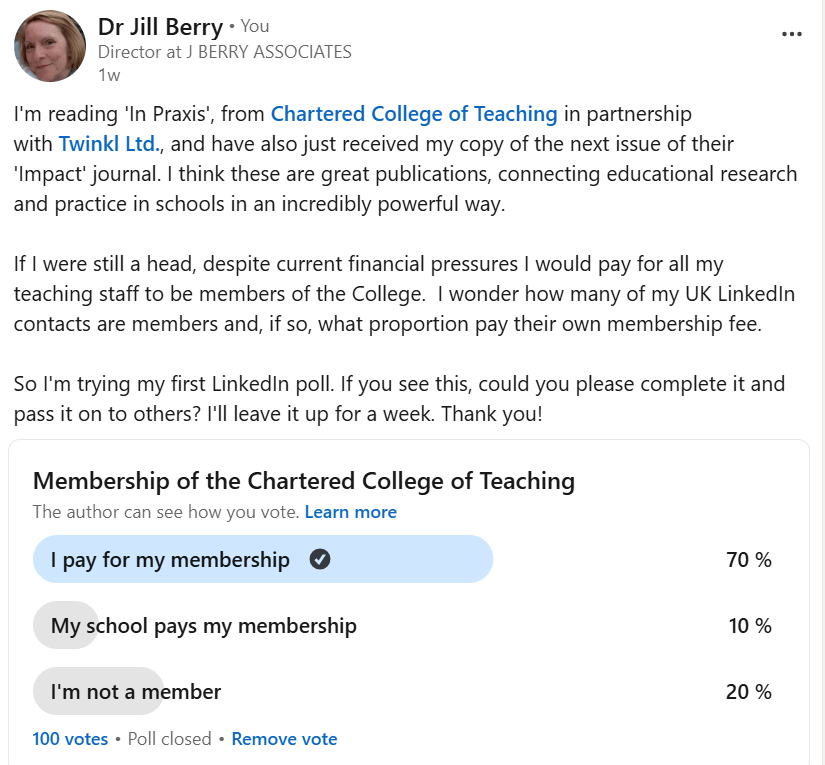
If I were still a head, despite current financial pressures (and I am not naïve about those), I would want to tell staff that if any of them wished to be members of the Chartered College, the school would pay their membership fee. Thinking about this, I launched a poll on LinkedIn a few weeks ago, and asked how many of my contacts who saw it (and were prepared to vote!) were members of the Chartered College, and what proportion paid for their own membership, or whether their schools met the cost. This was the outcome:
If schools are invested in developing their staff – and research has suggested that this is the most important thing we can do if we are to secure high standards and the most positive student outcomes – a gesture such as paying for membership of an organisation like the Chartered College is one positive step. I fully understand that this is a time when all educational establishments are trying to be ‘leaner’ in their operation, and the money they would usually devote to professional development might be channelled into other areas. I wrote about this earlier this year.
I talk to the teachers and aspiring and serving leaders I meet about how they can use their agency and take responsibility for their professional growth. Networking, discussion, observation and shadowing other educators, reading, action research projects in school, listening to podcasts and watching webinars, for example, take up valuable time but they are examples of low cost activity. I hope that schools support such activity, undertaken in teachers’ own time, by recognising and valuing it. Are staff given the opportunity to talk about their professional learning, to share their insights, support and learn from each other? When we list our recent and relevant professional development and learning, in a professional review or a job application, do we ensure we list all the sources of learning, and don’t just think of ‘CPD’ as ‘courses we have been on’?
And can Middle Leaders and Senior Leaders, Headteachers and Executive Principals ensure they show their appreciation of the staff they lead (support staff in addition to teaching staff) by encouraging their ongoing development, giving time to it, and, where appropriate, investing in it?
Thanks for reading.


